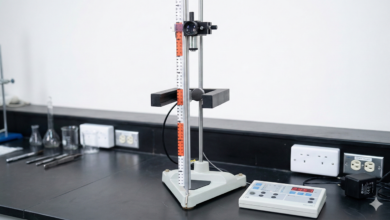
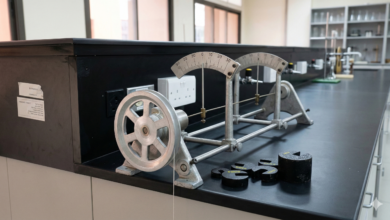
تجربة اعتماد مقاومة فلز النبيل على درجة الحرارة
Measuring The Temperature Dependency of a Noble Metal Resistor experiment

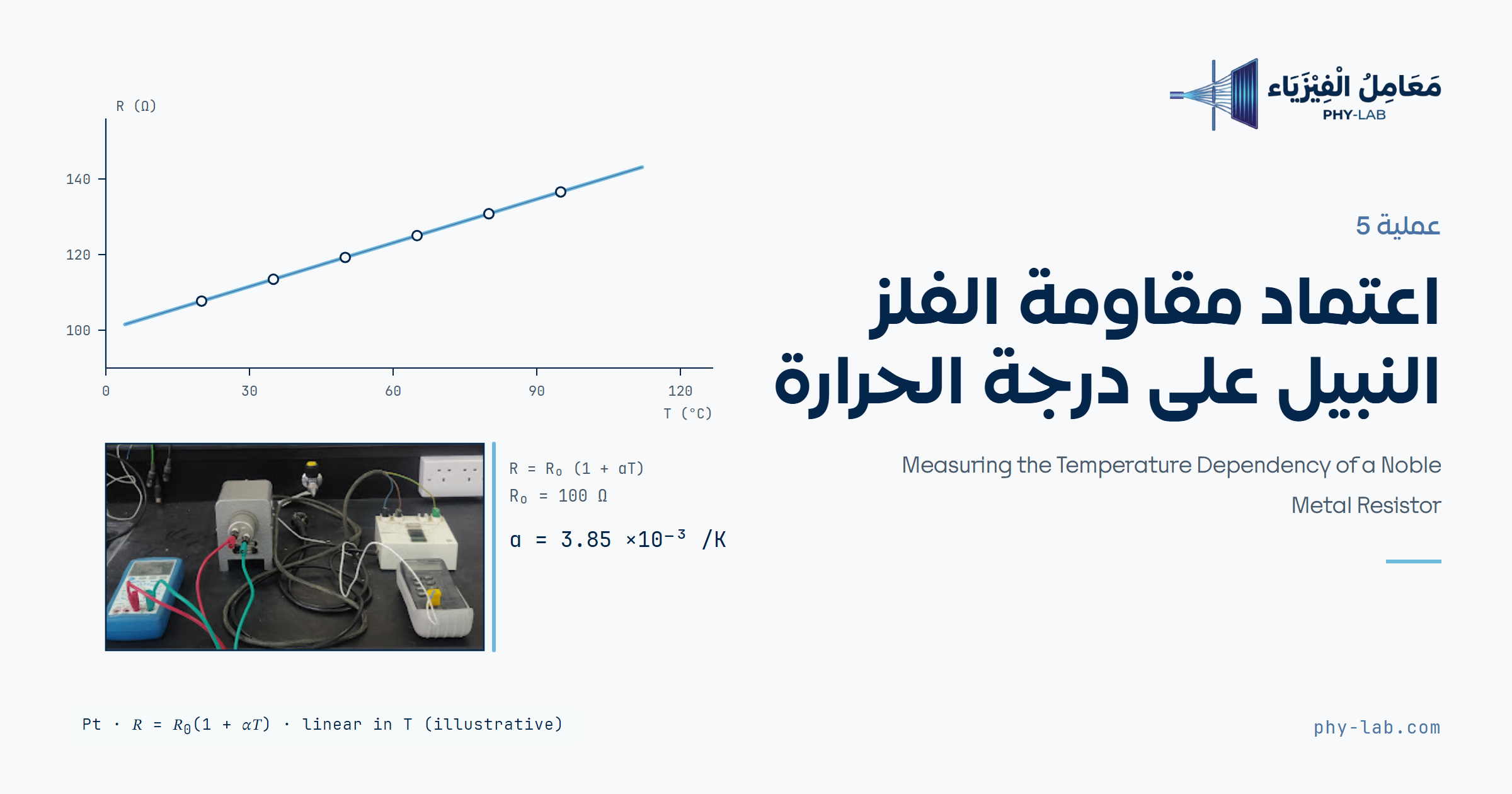
:Electrical circuit

اعتماد مقاومة الفلز النبيل على درجة الحرارةTemperature Dependence of a Noble Metal Resistor
أدخل درجة الحرارة والمقاومة، وتحسب الأداة R0 ومعامل الحرارة α من الخط المستقيم، ثم تقيس انحناء المنحنى وتقارن العينة بمعيار البلاتين.Enter temperature and resistance; the tool computes R0 and the temperature coefficient α from the straight line, then measures the curvature and compares the sample with the platinum standard.
الهدف والأجهزةObjective and apparatus
دراسة العلاقة بين درجة الحرارة ومقاومة الفلزات، وتعيين معامل الحرارة α لمقاومة من فلز نبيل.
To study the relationship between temperature and the resistance of metals, and to determine the temperature coefficient α of a noble metal resistor.
- عينة مقاومة من فلز نبيل
- جهاز أوميتر
- جهاز لقياس درجة الحرارة (مزدوج حراري من النوع K)
- أسلاك توصيل
- فرن كهربائي 230 V مع منظم حرارة
- مصدر طاقة
- Noble metal resistor sample
- Ohmmeter
- Thermometer (type K thermocouple)
- Connecting wires
- Electric oven 230 V with temperature controller
- Power supply
الأساس النظريTheory
في الفلز إلكترونات حرة كثيرة لا يتغير عددها تقريباً مع الحرارة. ما يتغير هو اهتزاز ذرات الشبكة: كلما ارتفعت الحرارة زادت سعة الاهتزاز وزاد تصادم الإلكترونات بها، فتزداد المقاومة. وفي مدى التجربة (20–250 °C) تكون الزيادة شبه خطية:
A metal has many free electrons whose number hardly changes with temperature. What changes is the vibration of the lattice atoms: the higher the temperature, the larger the vibration amplitude and the more often electrons scatter from it, so the resistance increases. Over the range of the experiment (20–250 °C) the increase is nearly linear:
حيث R0 المقاومة عند 0 °C (تقاطع الخط مع المحور الرأسي)، وT بالدرجة المئوية. والعلاقة الأدق للبلاتين هي معادلة كالندر–فان دوسن المعتمدة في المعيار IEC 60751، وفيها حد تربيعي صغير سالب:
Here R0 is the resistance at 0 °C (the intercept of the line) and T is in degrees Celsius. The more exact relation for platinum is the Callendar–Van Dusen equation adopted in IEC 60751, which has a small negative quadratic term:
قيم المعيار للبلاتين الصناعي: A = 3.9083×10⁻³ °C⁻¹، B = −5.775×10⁻⁷ °C⁻²، ومنها ᾱ = 3.851×10⁻³ °C⁻¹. والمقاومة Pt100 تعني R0 = 100 Ω.
Standard values for industrial platinum: A = 3.9083×10⁻³ °C⁻¹, B = −5.775×10⁻⁷ °C⁻², giving ᾱ = 3.851×10⁻³ °C⁻¹. A Pt100 resistor has R0 = 100 Ω.
خطوات التجربةProcedure
- صِل الدائرة كما في الشكل (1): منظم الحرارة يغذي الفرن، والمزدوج الحراري داخل الفرن بجانب العينة، وطرفا العينة إلى الأوميتر.
- ضع مقاومة الفلز داخل الفرن عند درجة حرارة الغرفة.
- انتظر حتى تستقر الحرارة، وسجّل درجة الحرارة والمقاومة.
- ارفع نقطة الضبط إلى القيمة التالية (+5 °C).
- قِس مقاومة الفلز بالأوميتر.
- كرّر الخطوتين 4 و5 عند درجات حرارة من 20 إلى 250 °C.
- ارسم T على المحور الأفقي وR على الرأسي كما في الشكل (2).
- عيّن R0، وهي المقاومة عند 0 °C.
- عيّن معامل الحرارة α = slope / R0.
- Connect the circuit as in figure (1): the temperature controller feeds the oven, the thermocouple sits in the oven next to the sample, and the sample leads go to the ohmmeter.
- Put the metal resistor inside the oven at room temperature.
- Wait until the temperature is stable, then record the temperature and resistance.
- Increase the temperature setpoint to its next value (+5 °C).
- Measure the resistance of the metal resistor with the ohmmeter.
- Repeat steps 4 and 5 at temperatures from 20 to 250 °C.
- Plot T on the horizontal axis and R on the vertical, as in figure (2).
- Determine R0, the resistance at 0 °C.
- Determine the temperature coefficient α = slope / R0.
الفرن يصل إلى حرارة عالية؛ لا تلمس جسمه ولا الأسلاك القريبة منه، واستعمل القفازات عند إخراج العينة. وانتظر الاستقرار عند كل درجة، فالمزدوج الحراري يسبق العينة في التسخين.
The oven gets very hot; do not touch its body or the nearby wires, and use gloves to remove the sample. Wait for stability at each temperature, because the thermocouple heats faster than the sample.
إدخال البياناتData entry
| # | T (°C) | R (Ω) | ΔR/ΔT (Ω/K) |
|---|
العمود الأخير ميل الوتر بين الصف وما قبله؛ تناقصه البطيء مع الحرارة علامة الحد التربيعي السالب.The last column is the chord slope between a row and the one before it; its slow decrease with temperature is the sign of the negative quadratic term.
البيانات الحالية توضيحية مولّدة من معادلة المعيار IEC 60751 لمقاومة Pt100 (R0 = 100 Ω، A = 3.9083×10⁻³، B = −5.775×10⁻⁷)، مع ضجيج ±0.03 Ω في R و±0.2 °C في T، وليست قياساً.Current data are illustrative, generated from the IEC 60751 equation for a Pt100 resistor (R0 = 100 Ω, A = 3.9083×10⁻³, B = −5.775×10⁻⁷) with ±0.03 Ω noise in R and ±0.2 °C in T, not a measurement.
لصق بيانات أو تحميل ملف CSVPaste data or load a CSV file
النتائجResults
التفسيرInterpretation