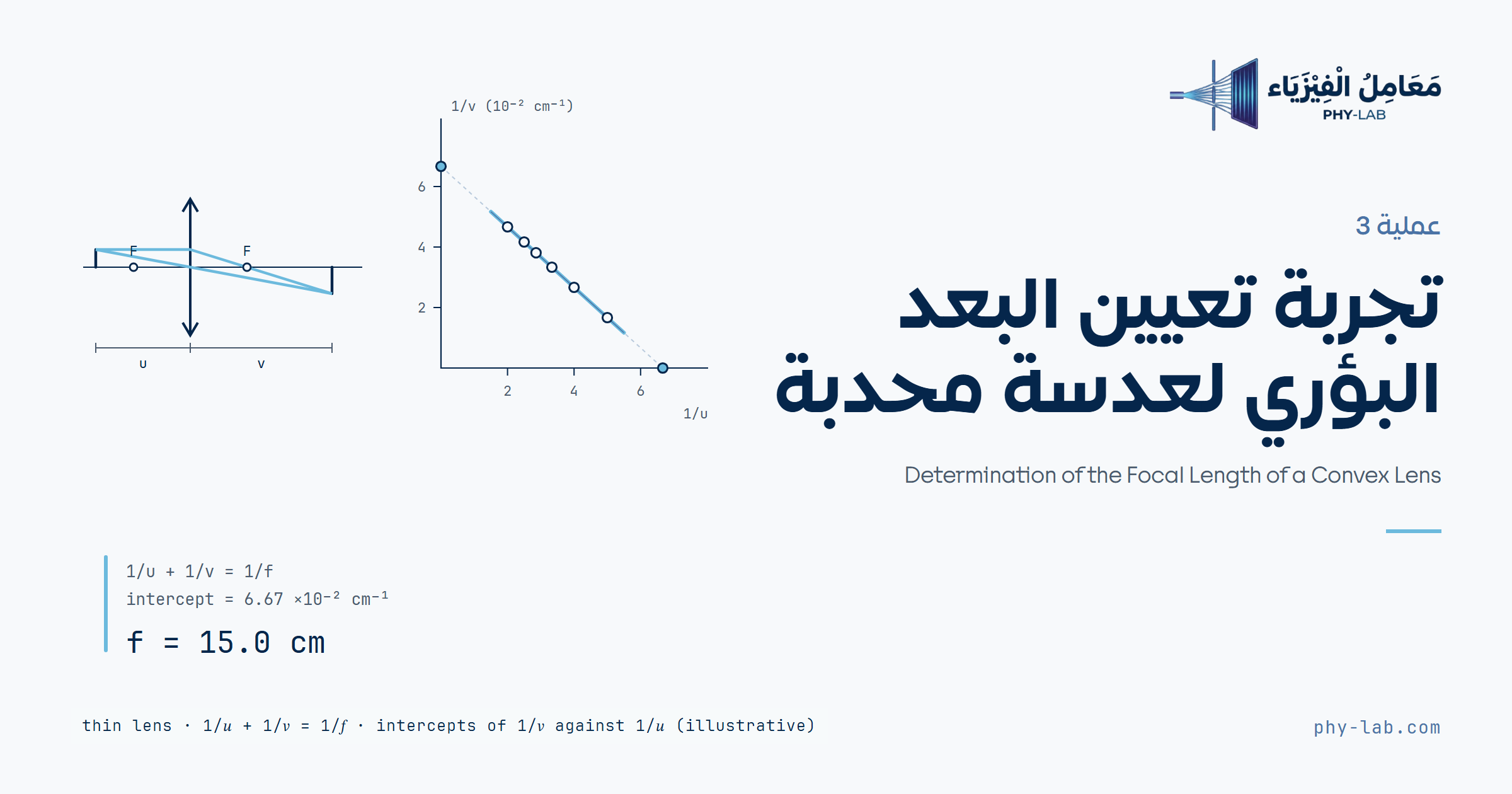
تجربة تعين البعد البؤري لعدسة محدبة
Determination of the Focal Length of a Convex Lens

تعيين البعد البؤري لعدسة محدبةDetermination of the Focal Length of a Convex Lens
أدخل بُعد الجسم وبُعد الصورة، وتحسب الأداة البعد البؤري لكل محاولة، وترسم 1/Sᵢ مقابل 1/Sₒ وتستخرج f من المقطعين، وتختبر أن الميل يساوي −1، وتقارن بالقيمة المكتوبة على العدسة.Enter the object and image distances; the tool computes the focal length of each trial, plots 1/Sᵢ against 1/Sₒ and extracts f from both intercepts, tests that the slope equals −1, and compares with the value printed on the lens.
الهدف والأجهزةObjective and apparatus
تعيين البعد البؤري f لعدسة محدبة (لامّة) من قياس بُعد الجسم المضيء عن العدسة So وبُعد الصورة الحادة على الشاشة Si، والتحقق من قانون العدسة الرقيقة برسم 1/Si مقابل 1/So.
To determine the focal length f of a convex (converging) lens from the distance of the illuminated object to the lens So and the distance of the sharp image on the screen Si, and to verify the thin-lens law by plotting 1/Si against 1/So.
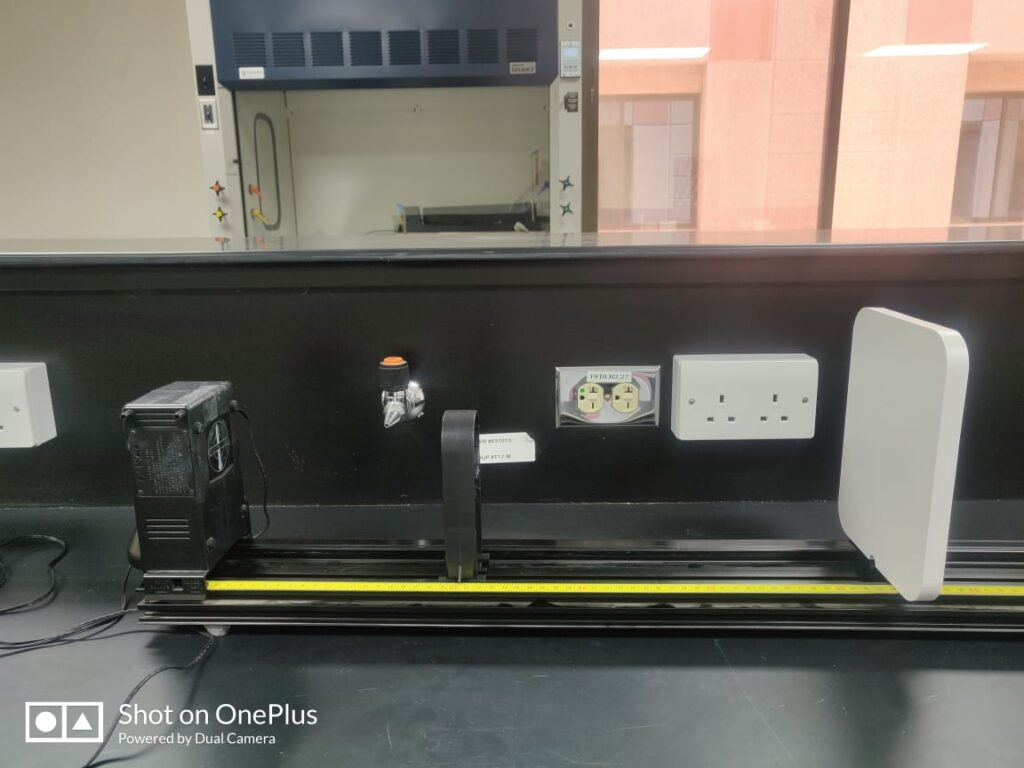
- مسطرة بصرية (مقعد بصري) عليها تدريج بالسنتيمتر
- مصدر ضوء عليه شكل مضيء يُستعمل جسماً
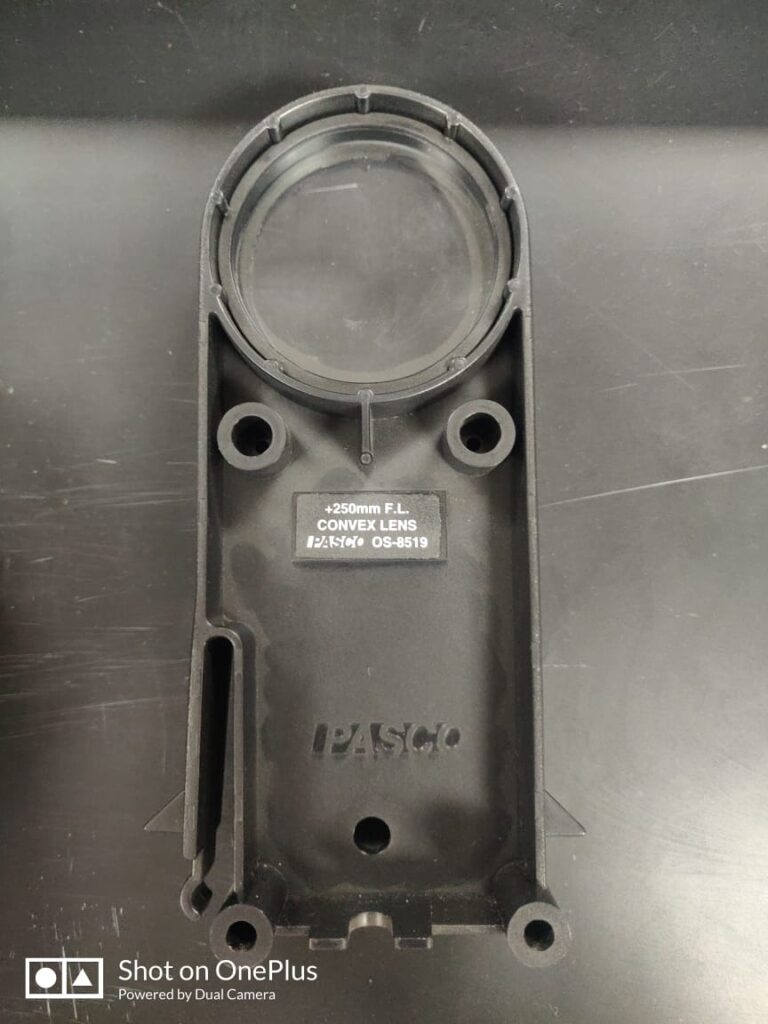
- عدسة محدبة في حامل (العدسة المستعملة في المعمل: PASCO OS-8519، بعدها البؤري المكتوب +250 mm)
- شاشة بيضاء على حامل
- Optical bench with a centimetre scale
- Light source carrying an illuminated figure used as the object
- Convex lens in a holder (the lab lens: PASCO OS-8519, printed focal length +250 mm)
- White screen on a holder
الأساس النظريTheory
العدسة المحدبة تجمع الأشعة الصادرة من كل نقطة في الجسم في نقطة واحدة خلفها، فإذا كان الجسم أبعد من البؤرة تكوّنت صورة حقيقية مقلوبة يمكن استقبالها على شاشة. وبإهمال سمك العدسة، وبجعل المسافات الحقيقية موجبة، ترتبط المسافتان بالبعد البؤري بقانون العدسة الرقيقة:
A convex lens brings the rays from each point of the object together at one point behind it, so an object farther than the focal point forms a real, inverted image that can be caught on a screen. Neglecting the lens thickness, and taking real distances as positive, the two distances are related to the focal length by the thin-lens law:
حيث P قوة العدسة بالديوبتر (D = m⁻¹) عندما تُقاس f بالمتر. والتكبير سالب لأن الصورة مقلوبة:
where P is the lens power in dioptres (D = m⁻¹) with f in metres. The magnification is negative because the image is inverted:
وإعادة ترتيب (1) تعطي خطاً مستقيماً في المتغيرين 1/So و1/Si ميله −1، ويقطع كل محور عند 1/f؛ فالرسم يعطي f مرتين، ويختبر القانون نفسه من الميل:
Rearranging (1) gives a straight line in 1/So and 1/Si with slope −1 that cuts each axis at 1/f; the plot gives f twice, and its slope tests the law itself:
ولأن So + Si ≥ 4f دائماً (المساواة عند So = Si = 2f)، لا تتكون صورة على الشاشة إذا كانت المسافة بين الجسم والشاشة أقل من 4f؛ أي 100 cm للعدسة 250 mm. وعدم اليقين في كل محاولة ينتج من خطأ قراءة So ومن مدى الوضوح عند ضبط الشاشة (δSi)، وهو الأكبر عادة:
Since So + Si ≥ 4f always (equality at So = Si = 2f), no image forms on the screen if the object–screen distance is less than 4f, i.e. 100 cm for the 250 mm lens. The uncertainty of each trial comes from reading So and from the depth of focus when setting the screen (δSi), usually the larger:
لا تحتاج التجربة ثوابت فيزيائية. اصطلاح الإشارة: المسافات الحقيقية موجبة؛ So هي المكتوبة S0 في الصفحة الأصلية (o من object).
No physical constants are needed. Sign convention: real distances are positive; So is the quantity written S0 on the original page (o for object).
خطوات التجربةProcedure
- ثبّت مصدر الضوء عند أحد طرفي المسطرة، وضع العدسة ثم الشاشة بعده، واجعل مركز الجسم والعدسة والشاشة على ارتفاع واحد وعلى خط واحد.
- ضع العدسة على بعد So من الجسم أكبر من f؛ ابدأ من نحو 40 cm.
- حرّك الشاشة حتى تظهر أوضح صورة مقلوبة. حرّكها ذهاباً وإياباً، وسجّل موضعَي بداية الوضوح ونهايته وخذ منتصفهما؛ نصف المدى بينهما تقدير لـ δSi.
- اقرأ So وSi من التدريج، مقيسَين إلى مستوى العدسة (مؤشر الحامل) لا إلى حافته.
- كرّر لست إلى ثماني قيم لـ So بين نحو 36 و80 cm. مع العدسة 250 mm يلزم أن تكون المسافة بين الجسم والشاشة 100 cm على الأقل، فبعض المواضع لا تُعطي صورة داخل طول المسطرة.
- احسب f لكل محاولة من (1)، ثم المتوسط وعدم اليقين.
- ارسم 1/Si على المحور الرأسي مقابل 1/So على الأفقي، وعيّن f من المقطعين، وتحقق أن الميل قريب من −1.
- قارن النتيجة بالبعد البؤري المكتوب على العدسة.
- Fix the light source at one end of the bench, place the lens and then the screen after it, and bring the centres of the object, lens and screen to one height on one line.
- Place the lens at a distance So from the object greater than f; start at about 40 cm.
- Move the screen until the sharpest inverted image appears. Move it back and forth, record where the image starts and stops being sharp, and take the midpoint; half that range estimates δSi.
- Read So and Si from the scale, measured to the lens plane (the holder pointer), not to its edge.
- Repeat for six to eight values of So between about 36 and 80 cm. With the 250 mm lens the object–screen distance must be at least 100 cm, so some positions give no image within the bench length.
- Compute f for each trial from (1), then the mean and its uncertainty.
- Plot 1/Si on the vertical axis against 1/So on the horizontal, find f from both intercepts, and check that the slope is close to −1.
- Compare the result with the focal length printed on the lens.
لا تنظر مباشرة إلى مصباح المصدر، وانتبه لحرارته بعد التشغيل الطويل. أمسك العدسة من حافتها أو حاملها ولا تلمس سطحها، فبصمات الأصابع تُضعف وضوح الصورة. رتّب أسلاك المصدر بعيداً عن مسار الحوامل.
Do not look straight into the source lamp, and mind its heat after long use. Hold the lens by its rim or holder and do not touch its surface; fingerprints blur the image. Keep the source cables away from the path of the holders.
إدخال البياناتData entry
| # | So (cm) | Si (cm) | 1/So (m⁻¹) | 1/Si (m⁻¹) | f (cm) |
|---|
البيانات الحالية توضيحية مولّدة من نموذج عدسة رقيقة بعدها البؤري الحقيقي 24.7 cm (الاسمي 25 cm)، مع ضجيج ±0.05 cm في Sₒ وتشتت في ضبط الشاشة يزداد مع Sᵢ (نحو ±0.5 cm عند 50 cm)، وليست قياساً.Current data are illustrative, generated from a thin-lens model with true focal length 24.7 cm (nominal 25 cm), with ±0.05 cm noise in Sₒ and a screen-setting scatter that grows with Sᵢ (about ±0.5 cm at 50 cm), not a measurement.
لصق بيانات أو تحميل ملف CSVPaste data or load a CSV file
النتائجResults
التفسيرInterpretation